

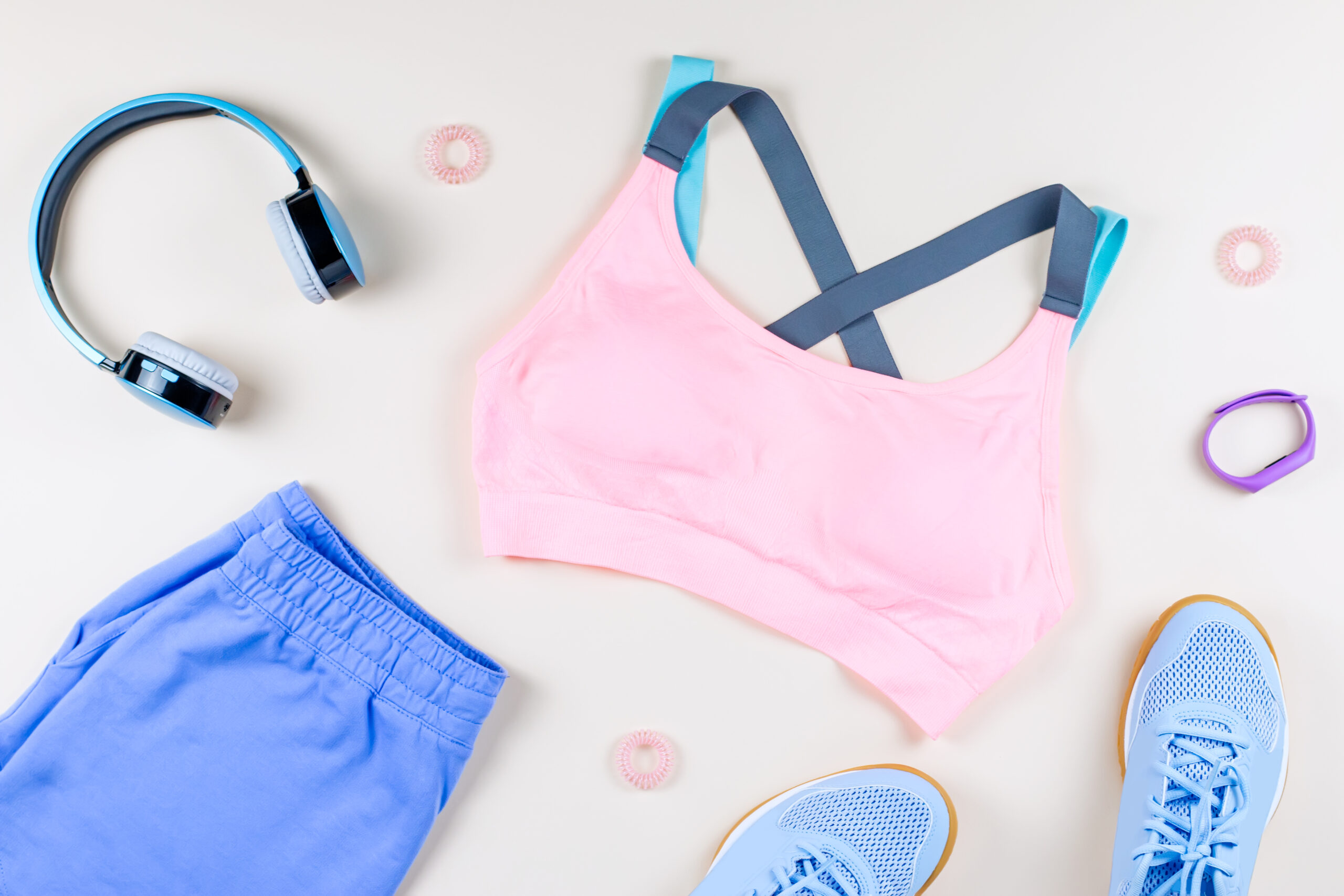
1. Get dressed for training - and that's already half the job
One of the biggest mental barriers when it comes to training is the very beginning. But that's exactly where something as simple as wearing sports equipment helps. Studies show that clothes affect our psychological state - sports equipment activates a feeling of readiness, focus and energy. Even when you are listless, as soon as you put on tracksuits, sneakers and a T-shirt, you have already taken the first, most difficult step.
And there is another psychological catch: when you are already trained for training, it is more difficult to rationally justify quitting. In a way, the body is already telling you, "Come on, we've already started, let's finish this." If you're having a rough day, say to yourself: "I'm just going to change clothes - nothing else." Very often, this is enough to start a movement.
2. "Only 5 minutes" rule
This trick is one of the simplest and most effective. When you think about a whole 30 or 45 minute workout, it can seem like a huge commitment, especially if you're tired or stressed. But 5 minutes? You can always do that.
Say to yourself, "I'll only work for five minutes."„
It can be a mini warm-up, a couple of stretching exercises, or a short circuit of exercises. The point is to take the pressure off yourself. Most often it happens that when you start - you stay in motion. The body warms up, the rhythm picks up, and the motivation rises. Five minutes easily becomes fifteen, twenty or the entire planned training session.
And even if it really stays for five minutes, you've still done more than if you skipped it completely. Small steps build a big habit.

3. Connect the training with the ritual
Motivation is unpredictable, but habit is stable. That's why the key is to "hook" training on something you definitely do every day. It can be your morning coffee, your return from work, a short break after lunch or the time before your shower.
When training becomes part of the ritual, you don't think about it anymore whether you will practice - you simply follow the routine. This trick harnesses the power of automation: the brain loves patterns, and once you've got the coffee → training connection right, the next time everything goes much easier.
This is especially helpful on days when you don't feel like training, because ritual takes over instead of motivation. You just follow the flow of the day and training fits in as a natural part of the schedule.
4. Track your progress
Recording progress has a huge psychological effect on discipline. When you write down every workout you do, you create visual evidence that you are putting in the effort. It can be a mini calendar, an application with "check" fields or notes in the phone.
When you see a streak of days or weeks where you've been consistent, you don't want to break that streak. It is famous chains method - the longer the chain of consistency, the greater the desire to preserve it.
Also, tracking progress helps you notice small changes that aren't immediately visible in the mirror. You notice that you are no longer out of breath, that your pulse is more stable, that your body is more mobile, that you feel better after training. Those small victories fuel motivation.
5. Reward yourself
After training, treat yourself to something that makes you happy. The brain loves rewards, and every positive emotion after exercise builds the habit of associating training with a good feeling.
It could be:
- long, relaxing shower
- a cup of your favorite tea
- podcast episode
- delicious, healthy meal
- five minutes of silence after a busy day
The point is that the very act of exercise becomes a ticket to something pleasurable. Thus, training ceases to be an obligation - it becomes a habit that leads you to something you love.

Conclusion
Motivation is not always the same - and that's normal. Instead of waiting for her, use little tricks to help you get going. Often the hardest part is just the first step, and once you take it, your body and mind will do the rest.
 Serbian
 English
 German
 Italian
 Russian
 French
 Spanish
 Arabic
